This shocked me into learning how to hire smarter. Conducting good interviews is an important part of the process.
In my last article and video on hiring top candidate I talked about screening resumes and conducting a brief phone interview. I also suggested using a pre-hire assessment, the Step One Survey to check for integrity, reliability and work ethic amongst other things.
Once you have selected your top prospects the next step is to schedule in-person interviews. This can be done by the hiring manager alone or a hiring team, which helps provide diverse observations.
Preparation
Prepare a list of questions based on the most important tasks and skills for the job. These questions should be open-ended, meaning they should require an explanatory response rather than just a yes or no or factual response. Ask questions that will have the person explain in detail how they performed specific job responsibilities and what they achieved over time for those crucial tasks.
For example if a person in a sales job was to prospect for new clients by attending conferences you could ask the question, tell me about how you worked conferences to generate new leads. However a better question or a follow-up to that one could be, tell me about a conference that you chose to attend, the goal you had for generating new leads and the outcome?
The second question allows you to note down crucial performance based information that can be validated with the candidate’s references. Brad Smart of Topgrading, recommends telling the prospect that you will need to validate their answers with the references they will provide. He says to remind the candidate of this throughout the interview and this forces honest answers from the candidate.
Types of Questions
Questions should cover work experience, education and personal factors. Here are examples of some good questions.
Work experience
Education
Personal Factors
There are many more questions you could ask for each of these categories. Here is a good article containing excellent questions/ Research books and articles on the web as there is an abundance of information. We also offer a training program that contains a complete list of recommended questions.
The Structured Interview
The best approach for an interview is first to plan and be prepared. This will make for a more productive and comfortable interview session.
If possible, have someone greet the person upon arrival and hand them at information sheet about the position or a role description, which they can review while waiting for the interview to begin.
As you greet the candidate make him feel at ease by showing real interest and warmth and by discussing general topics of interest that you may have noted on their resume. You want to make the person feel comfortable.
State the goal of the interview and begin your introductory questions. You should be listening 70% of the time, but allow the candidate to ask questions as well as they also need to know if you are the right company and manager for them.
Rating the candidate
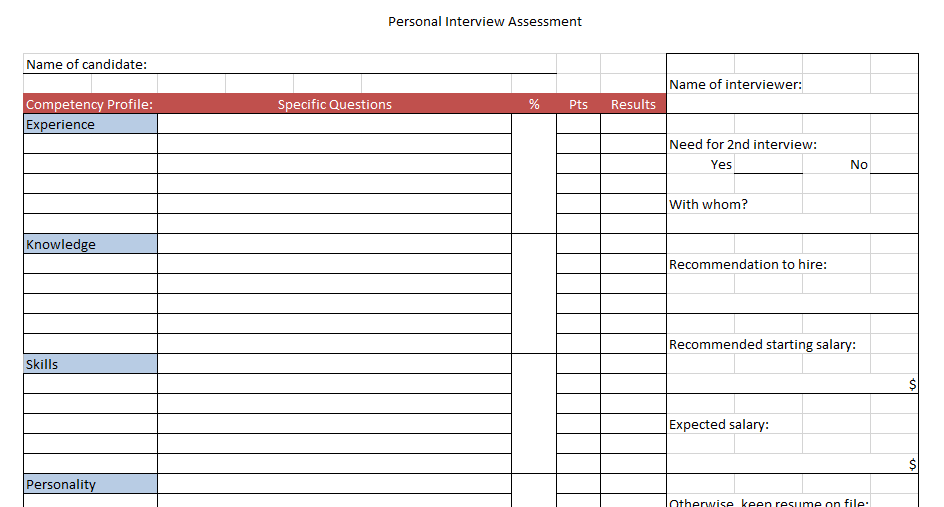
I like to create a table where I list in one column the knowledge skill and experience and then in the column next to it I write a question. In the next column I assign a rating on a scale of 1 to 5 for how well that person demonstrates that specific criteria. I fill in the rating column once the interview is completed and if you are doing the interview as a team the rating system works well as it allows you to compare perspectives and discuss where there may be gaps in perception.
Tests and Evaluations
Skill testing is also recommended as it can play a role in new employee training as well as validating the skills level of the candidate. Just because someone claims to know how to operate a certain software program does not mean they have the skill level you are expecting. eSkill provides a vast array of skill testing in multiple languages that can also be customized according to your need.
Second Interview and Reference Checking
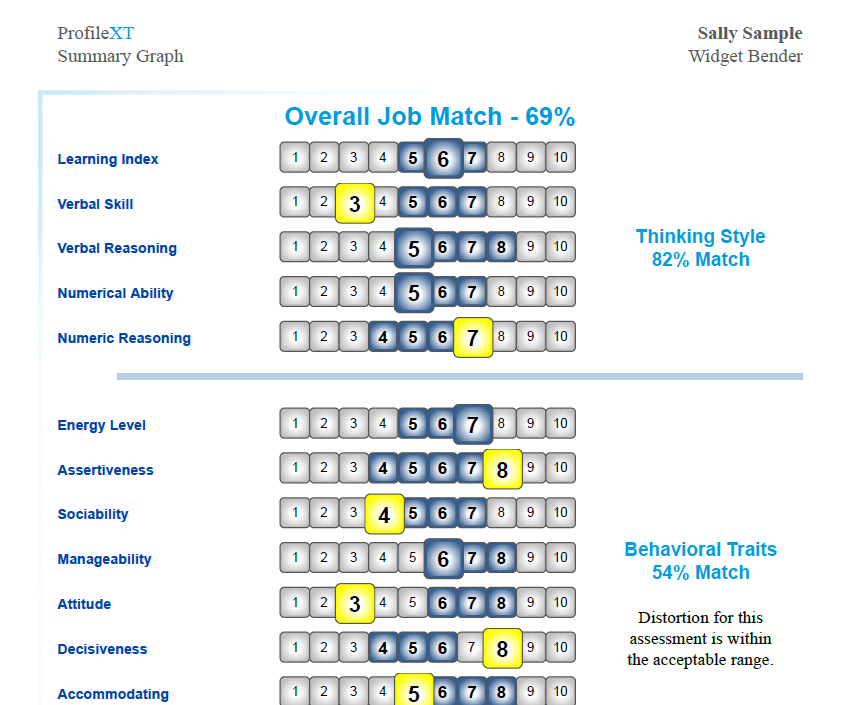
In most cases I suggest conducting a second interview with your final candidates especially if you are using tests and assessments. The profile XT also provides interview reports that generates questions to probe into specific areas of concern.
Reference checking may also be done at this stage to help you in your decision or could be done after the second interview and evaluating the results of the assessments.
I will cover reference checking in a future article and video.
Stephen Goldberg